Showing posts with label ACT Health facilities. Show all posts

Monday, August 10, 2015

Snapshot of ACT Senate Estimates and Appropriation Bill, Health Implications

Hello Everyone!

I thought I would provide you of a little snapshot of the Legislative Assembly for the ACT, Select Committee on Estimates 2015-2016 ’s report on the Appropriation Bill 2015-2016.

It sounds a bit dry but is as noted by the chair of the committee an inquiry process that ‘is one of the key scrutiny mechanisms enabling the Assembly to assess each year how the Government intends to spend taxpayers’ money and whether it is achieving stated outcomes.’

The committee looked at all kinds of ACT Government spending and the two volume detailed report can be found at  http://www.parliament.act.gov.au/in-committees/select_committees/template4

In the first volume there was 132 references to health, including mental health, justice health, health infrastructure, preventative health in child and breast and cervical cancer screening. I have selected some key points and recommendations from volume one around health and health services in the ACT that may be of interest. They are all reworded or directly quoted from Report 1 Volume 1.

Cross Boarder Health Care Provision
·         An acknowledgment that ‘a quarter or more’ of patients come from across the NSW border for health care. The NSW Government is likely to compensate the ACT Government on a population basis. It was also stated that people travelling from NSW to ACT for care often require acute care as these services are not available to them in NSW.

·         The Committee recommended that the ACT Government continue to work with all First Ministers and the Commonwealth Government to ensure sustainable health funding for State and Territory governments so they can continue to deliver high quality health services to the community.

Community Consultation

·         The Committee recommended that any decision-making by the ACT Government around community access to health services be undertaken with proper community consultation
·         A Committee recommendation that ACT Government consider an improved way of communicating how health services and health outcomes are delivered to the community.

Postcode Health Care

·         The Committee discussed the number of people presenting at Calvary and Canberra Hospital Emergency Departments. The Deputy Director-General of Canberra Hospital and Health Services stated,  “We are working with Medicare Local to try and get a better sense of that and work out what the patterns are and what, if anything, can be done with them. But, of course, it is individual choice there and if people have confidence in Canberra Hospital and prefer to present there rather than Calvary hospital, then that is their choice.”

·         Additionally, the Committee followed up concerns about the possible use of postcodes to determine where patients would be allowed to access maternity and other health services. The Minister advised that: “These issues warrant consideration but no decision has been made in relation to them and nor would it be without engagement, discussion and consultation with the broader community.”

·         The Committee noted that, whilst the ACT Government has not decided to implement a postcode-based approach to hospital choice, it has not ruled it out. The Committee also agreed that the ACT Government should ensure all its health services are being utilised effectively.

Training and Hospital Culture

·         The Committee sought information on training culture in ACT hospitals and was advised by the Minister that: “It is the case, as we know, that there have been a number of issues raised nationally when it comes to the training of junior medical specialists. Junior medical specialists undertake training in our hospitals to become consultant specialists in their own right. We have seen, for example, the recent reporting from Four Corners about poor behaviour on the part of certain specialists in hospitals interstate when it comes to the training environment they provide for junior medical officers. We have seen similar concerns raised here in the ACT. The maternity services concerns are a good example of that where there was significant discord and what I would characterise as not healthy relationships at that time between trainees and the senior medical staff involved in the training.”

·         The minster then announced “So today, Ms Fitzharris, that I have instructed my director-general to commence an immediate review of the training culture inside the Canberra Hospital to make sure that respectful and professional relationships are being sustained and maintained, and that our existing policies and programs are being effectively implemented—and, if they are not, to look at what we can do to make sure that they are.

·         The Committee further heard from the Director-General that the review of training culture would be started immediately and would be an independent external review. The review is to be conducted over three or four weeks and will be ‘fast, deep and responsive’, with recommendations to be made ‘to ensure that the training culture remains a positive one, productive and develops the clinical and professional skills that we need to see in our future clinical leaders.

Elective Surgery

·         The Committee discussed concerns raised by community members around the cancellation of non-elective surgeries, particularly where people had turned up and been prepped for surgery and then sent home, in some cases multiple times. The Committee noted that there is no information available publicly that indicates targets and achievements for the timeliness of non-elective surgery and the number of people waiting.

Adolescent Mental Health

·         The Committee recommended that a whole-of-government inquiry be carried out, and the findings presented to the Legislative Assembly by March 2016, on the inpatient and outpatient services, support programs and care models for adolescents facing mental health issues.


These recommendations and review of health service provision in the ACT is useful to remember as health consumer advocates and are worth keeping a watching brief on as they directly affect our care.


Eleanor Kerdo, Policy Officer

Tuesday, June 2, 2015

So, what do you think of the ACT Budget? Our initial response.

We see a continuation of the modest growth in heath funding to advance the ACT Government’s plan for our city. The Health budget hits $1.5 billion, around a third of the total ACT Budget. The Government is very clear about their commitment to providing health services and they are moving in the right direction.
The fun begins now with the analysis of the 
Budget Papers.
On the whole this is a Business-As-Usual budget. It continues to deliver on the services announced last year, including the continuation of specialists at the Canberra Hospital Emergency Department ($5.7m) and increase in outpatient services for women and children and the Centenary Hospital ($4.3m).
Construction of University of Canberra Public Hospital starts in 2016. This will be a welcome addition to the public hospital system in Canberra. A part of this project is the provision of car parking, often dismissed as a trivial issue. We are very pleased to see that the arrangements have been finalised and made public for parking at the University of Canberra Public Hospital. During the recent consultation on the Reference Design the car parking was not finalised and raised more than a few eyebrows. It is now known that there will be 400 off-site car spaces. There are no dollar amounts included in the budget papers as this is deemed commercial in confidence. (It does make me wonder how contentious funding for car parking must be). It is not clear if the car parking will require user payment.
Some of the good news of this budget is the additional funding for Calvary Hospital. There is a clear vision to have Calvary and Canberra Public Hospitals as part of a networked, integrated health system. There is $5.6m for the upgrade of the Cavalry Public operating theatre and a further $3.7m for upgrading of medical imaging equipment. There will also be additional beds at Calvary. It is important to enhance Calvary so that they can play an increased role in elective surgery into the future.
The draft Clinical Services Plan on the Time to Talk Website from 2012 set this out:
To achieve the most efficient and effective use of resources, it is essential that the ACT’s two public acute hospitals operate as a network with clearly defined roles for each hospital that complement and support integrated service delivery. Roles will be defined by:  the level of acuity of care delivered; and clinical specialty. To explain the acuity of care that a health facility is able to provide, a system of ‘role delineation’ is commonly used in Australian jurisdictions. The Health Directorate has utilised the NSW Health Guide to Role Delineation of Health Services as the basis for delineating the roles of the Territory's hospitals within networked arrangements. p. 26
Prior to the budget the Minister announced an increase in the number of beds in intensive care at Canberra Hospital. Provision has been made for $10.2m over four years. This demonstrates the significant costs of this level of care: intensive care costs an enormous amount of money.
Another big ticket item is the continuation of additional funds to enhance the numbers of people who can access elective surgery. The Government has invested strongly in this area in the past with funding last year to provide surgery for an extra 500 people. They have committed to funding an additional 500 surgeries again for the next two years, at a cost of $7m per year. This will improve waiting times. This funding will stop in 2017-18 unless there is extra funds from the Commonwealth Government.
Care in the Right Place is a new program with funding of $14m over four years. This includes increased access to cancer outpatients services, providing more doctors and establishing a central intake services in the Cancer Centre to streamline access.
This program also makes provision for an expansion of pain management services. This comes on the back of the increase in funding last year where $9m was allocated for this. It is not clear how much is specifically set aside in this budget. People living with persistent and chronic pain are not well served by our existing services and this allocation will make a difference.
Hospital in the Home is also a good initiative and has received additional funds, building on the expansion of this service last financial year. There is $1.4m over four years to increase the number of people who receive care at home as well as come to the day clinic for registrar review.
There is good news for end of life care. There is $2.4m over four years to enhance the provision of hone based palliative care. We know that this is a valued service in the community that is over subscribed. Additional capacity in this area is very welcome. This is in keeping with the ACT Government Palliative Care Services Plan
In addition to the increased bed capacity, allocation of resources should also be considered to support a range of other modalities including home based care, day hospice and respite care. p.12
Nick Wales joined me at the
ACT Budget lock up today
Last year the ACT Government took the decision to absorb the cuts announced in the Federal Budget. This year the financial position has been compounded by the Government response to the Mr Fluffy Asbestos and the reduction in GST revenue. This means that we are facing a deficit of $407m.
The Treasurer stressed that unlike other jurisdictions, including the Commonwealth, the ACT Government does not borrow money to fund recurrent operating expenses and that they run a cash surplus every year.  They only borrow for infrastructure projects that add to the asset base of the Territory. And this budget does contain infrastructure spending for the health sector.
This budget has allocated funds for 16 more beds at both Canberra and Calvary Hospitals ($40.6 m). This is in additional to the beds announced in last year’s budget. This is welcome news. We continue to see more people presenting at the Emergency Department requiring admission and Canberra Hospital has been under significant pressure, routinely operating at over 90% capacity.
The ACT Government seems to have prepared a budget that balances the needs of infrastructure and business with the needs of people. One of the concerning elements will be in the out years, when the full effects of the of Commonwealth funding of the national Partnership Agreements takes hold, from 2017-2018. The big question that we need to address is how can we sustain this into the future?

Darlene Cox
Executive Director
@darlenecox


Tuesday, March 31, 2015

Mobile Dental Care Service in Residential Aged Care Facilities - By Sandra Avila

In February this year, Matt Lee, (Project Officer - Mobile Dental Clinic, ACT Health, Dental Health Program) reported their dental health services are primarily for children and people with some type of concession and it is delivered by ACT Health. Matt mentioned that there are several dental clinics in the ACT which are located at Phillip Community Health Centre, Belconnen Community Health Centre, City Community Health Centre and Gungahlin Community Health Centre. When people have a dental emergency, they may have the appointment wherever they can see a dentist and the hospital takes emergencies during after-hours.

ACT MOBILE DENTAL CLINIC Image Credit : ACT Health
The mobile dental clinic was a commitment from the 2012 ACT Election and the government will invest $1.6 million over four years to establish and run the service. Funding for this project was given in August 2013. The mobile dental clinic was created to initially serve residential aged care facilities, special schools and to the young parents at the Canberra College Cares program. However, at the moment aged care facilities are their priority area.

Matt mentioned that one of the most challenging parts of this project was the procurement process and to prepare a detail submission on the requirements of the mobile clinic as there is not a lot of research in this area. A company in Queensland was selected to build the mobile dental clinic.

The mobile dental clinic was specifically designed for the ageing population including wheel chair accessible, water heaters and air conditioners. The main goal was to make the clinic functional for patients. They also have a reception and a sterilising area. A lot of electricity is required to run the clinic effectively therefore they installed generators and solar powers to ensure the track is environmentally friendly and uses energy from a responsible source. There were also a lot of inspections to ensure the clinic was operational and able to provide high quality dental services.

Matt also said that when they were in the designing stage they worked closely with a Local Health District in NSW as they started using a mobile dental clinic approximately two years ago. This was a very valuable process as the mobile dental clinic in the ACT was able to incorporate in the design the aspects that worked well for NSW and to avoid making the mistakes that they made in their design.

They started to trial this service at Salvation Army Mountain View Aged Care Plus Centre and they were there for about three weeks attending patients. At the moment they are determining how to deliver the service. Initially they wanted to see everyone within 12 months and go back for a check-up. Unfortunately this is not realistic so now they have implemented a triage process. They are still planning whether to stay at a residential aged care facility until they see everybody but this means that they would take a very long time to visit all the aged care facilities in the ACT.

There is little research about aged care and dental services and most of the research available is anecdotal. It can also be challenging to treat patients with severe dementia who cannot handle dental treatments.

Matt also commented that they have two dentists and two nurses and they rotate during the week and they also train junior dentists. They see all the people living at residential aged care facilities including self-funding retirees. However, they do not provide services for the residents of independent living units.  Before going to a residential aged care facility they send an information package to all the residents which include a letter explaining the process, preconsent forms for treatment and for dental screening and responsibility forms for those who have guardians.

Matt mentioned that they have received positive feedback from patients and there has not being many issues with the vibration of the track. They are in the process of setting up an evaluation system. At the moment they are able to report on how many patients they have seen and what treatments were provided. Fees may change later and this is something that is being reviewed.

Treatment in the ACT Mobile Dental Van :Image Credit: ACT Health 
They have contacted all the residential aged care facilities in the ACT and the majority of them have confirmed that they need dental services. It is expected to spend about two years getting around all the residential aged care facilities in the ACT.

They have been documenting the benefits of their service and collecting anecdotal stories. 

Matt showed to members of the group some photos of the mobile dental clinic.
At the moment they are unable to visit older people with mobility issues living at home as they are only visiting residential aged care facilities.

In the future they would like to go with the mobile dental clinic to public events such as the Floriade to educate people on oral health.

Members of the group were delighted to see this service being implemented in residential aged care facilitates in the ACT and congratulated Matt for all his work on the mobile dental clinic.

A video of the Health Minster talking about the Dental Van can be seen here.
The ACT Government Press Release can be seen here


Launching the ACT Mobile Dental Van. Image Credit: ACT Health


Author: Sandra Avila Secretariat Aged Care Consumer Reference Group

Friday, July 4, 2014

Job Vacancy

Project Officer
Health Infrastructure Program

(SCHADS Community Worker Level 5)

Do you care about the quality and safety of health services? Are you interested in planning and project management? Can you work independently and use your initiative? Are you resourceful and like a challenge?

We are looking for someone to  join our staff team working on the Health Infrastructure Program (HIP).

The Project Officer will work under limited supervision by the HIP Coordinator to
  • Support Consumer Representatives on a range of committees involved in decision making for the HIP;
  • Represent HCCA on a range of committees involved in decision making for the HIP;
  • Network with consumer and community groups to further consumer involvement in informing decisions regarding the HIP.  This will include outreach to marginalised and vulnerable communities (including but not limited to: people living with chronic conditions, who have low socio economic status or are disadvantaged, are from culturally and linguistically diverse backgrounds, have a disability, young people and children);
  • Liaise with ACT Government about opportunities for consumer involvement in HIP activities; and
  • Work closely with consumer and community organisations to ensure opportunities for engagement of health consumer representatives in HIP activities.
  • Help ensure the work of HCCA on the HIP is effective and meets the requirements of the Service Funding Agreement with the ACT Government.
This is a full time position but there is potential to negotiate on hours. This is a contract position until 30 June 2016, in line with our Service Funding Agreement with the ACT Government. Other conditions of employment will be based on the Social, Community, Home Care and Disability Services Industry Award 2010 (SCHADS).

HCCA promotes a healthy work-life balance and is committed to offering employees a supportive family friendly working environment.

Selection Criteria
  1. Excellent communication and interpersonal skills to effectively communicate information and ideas, work cooperatively with others, and negotiate and advocate on behalf of consumers. 
  2. Demonstrated ability to manage complex projects effectively including experience in project management
  3. Excellent time management skills and demonstrated ability to manage competing priorities and achieve work outcomes
  4. Understanding of governance principles and committee processes
  5. Strong understanding of community development and experience in community engagement, including the capacity to represent the organisation in public forums and facilitate meetings, information sessions and workshops
  6. Demonstrated ability to plan, organise and facilitate workshops, information sessions, discussion groups and public meetings.
  7. Proven ability to develop and maintain strong networks and partnerships with key stakeholders including people from diverse language and cultural backgrounds.
  8. Demonstrated understanding of the barriers and opportunities which exist in achieving systemic change
  9. Computer literacy including experience with MS Office and Internet research skills

DESIRABLE QUALIFICATIONS:

  1. Relevant tertiary or other recognised qualifications
  2. Current drivers licence.
All applications must include:
1. A covering letter stating your intention to apply for the position and addressing the selection criteria listed below.
2. A current CV.
3. Information for two Referees. (Name, Title and Organisation, Relationship to applicant, contact telephone, contact email address)

Applications close on Monday 21 July 2014 and should be addressed to:

Darlene Cox
Executive Director, HCCA
100 Maitland St Hackett ACT 2602

Full details are on the HCCA website:


Tuesday, June 3, 2014

HCCA response to the ACT Budget 2014

The ACT Government is to be commended for putting people first in this budget.  They have taken the decision to absorb the cuts made by the Federal Government and have crafted a budget that delivers modest expansion of health services.


ACT Budget Papers

The ACT Government have taken the decision to absorb the cuts announced in the recent Federal Budget.  These cuts are by no means small. Treasurer Barr today outlined that more than $500m has been written off the ACT income from 2014-15 until 2017-18. This is due to a downturn in the housing market which will result in less land being sold for development ($250m over four years) and also the Federal Government walking away from the National Health Reform Agreements ($248m over four years).

The Treasurer outlined that the Commonwealth is not only the major employer in the Territory but is also a large consumer of goods and services. The cuts announced in the Federal Budget will see between 6000 and 6500 full time jobs disappear (2.9% of employment in the ACT). This will have flow on effects to the Canberra economy.

The Treasurer stressed that unlike other jurisdictions, including the Commonwealth, the ACT Government does not borrow money to fund recurrent operating expenses and that they run a cash surplus every year.  They only borrow for infrastructure projects that add to the asset base of the Territory. And this budget does contain infrastructure spending for the health sector.

This budget has allocated funds for more general inpatient beds at both Canberra and Calvary Hospitals (15 beds). The 31 beds announced at Canberra Hospital includes 15 beds that were funded in 2013-14. This is welcome news. We continue to see more people presenting at the Emergency Department requiring admission and Canberra Hospital has been under significant pressure, routinely operating at over 90% capacity. There is also provision for additional staff at Canberra Hospital to support the opening of these beds which is good news, as you can’t open beds without having staff in place.

Hospital in the Home (HITH) which looks at caring for inpatients in their home will also have the service increased by six ‘beds’.

There is also funding to support two new emergency department physicians one for Canberra Hospital and one for Calvary. This is hoped to decrease waiting time in emergency.

The Walk in Centres are a great addition to our health system and provide affordable, appropriate care to consumers. This budget allocates funds for the operation of a new Walk in Centre at the Belconnen Health Centre.

There is also an announcement of about $9m for the expansion of outpatient services including a focus on chronic pain management. People living with persistent and chronic pain are not serviced well by our existing services and this allocation will make a difference.

There is also a modest increase to delivering intensive care at both public hospitals with two more beds at Canberra Hospital and another bed at Calvary Public Hospital. Canberra Hospital is the tertiary referral hospital for Canberra and the Capital Region and this will go some way to meeting the ongoing demand for these important services.

Calvary Health Care ACT will receive ongoing funding of $1.5m for the Birth Centre to continue. This is welcome news as the Birth Centre complements the Canberra Midwifery Program that runs at the Centenary Hospital for Women and Children in Garran.

This follows the launch of the Obesity Management Services, which is a community based service to support people with a BMI of more than 40. An extension of this program is the provision of publically funded bariatric surgery. This amounts to just over $1m over four years and modelling suggests this will enable thirteen people to have the surgery each year. This will make a significant difference to their lives and complement the important work of the Obesity Management Service.

We will see the opening of the Capital Region Cancer Service early in the new financial year. The opening of this services has been delayed due to a burst water pipe, but work has almost finished to rectify this and we see $8.5m made available to deliver services.  Provision has also been made for an expansion of the lymphedema services at Calvary Hospital, with $1.9m funding over four years and new three staff positions to support this.  This service is important in supporting people, mostly women, in overcoming the effects of breast cancer and other conditions affecting the lymphatic system.

Mental Health funding has been maintained with an emphasis on community programs for suicide prevention, and children and youth mental health. Suicide prevention funding will include bereavement counselling for those who have lost someone due to suicide and community awareness campaigns. There has been provision for a modest expansion of service for people with eating disorders. This is an area of need in our community and we welcome the investment in this.

The Funding for the Health Infrastructure Program has been continued and HCCA is excited to see the commitment to the University of Canberra Public Hospital. We look forward to continuing to work with the Government on these projects.

In stressful times it is hard to get the balance right but on this occasion I think the ACT Government has done well in the short term to compensate the Canberra community from the worst effects of the Federal Budget. The big question is how can we sustain this into the future?

Darlene Cox
Executive Director

@darlenecox

Monday, March 24, 2014

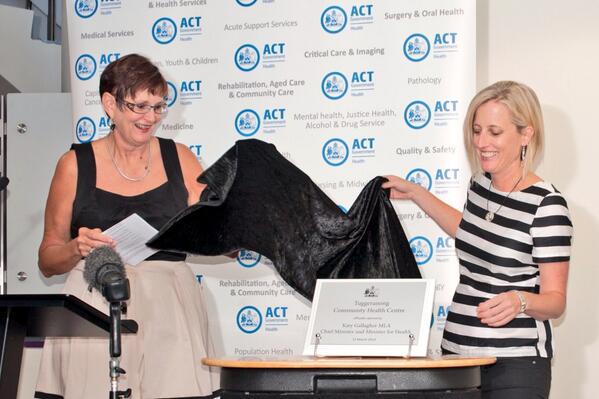
Tuggeranong Community Heatlh Centre

We attended the official launch of the Tuggeranong Community Health Centre on Saturday 22 March 2014. This is the new, refurbished health centre in the Tuggeranong Town Centre.
Dr Peggy Brown and Chief Minister, Katy Gallagher MLA unveiling the plaque (@ACTHealth Twitter feed).

The Community Open Day provided an opportunity for members of the community to walk through the new facility.

We had a stall on the second floor in the new area for renal dialysis. We spoke to consumers about after hours primary care, the role of the walk in Centre as well as how to access services available at the Community Health Centre.
Eleanor and Yelin on the HCCA stand.
The works have been completed as part of the ACT Government's expansion and refurbishment of health services. More information about their health infrastructure program is on the ACT Health website.

Tuesday, March 6, 2012

Palliative Care


The needs for palliative care services in the ACT are increasing, and have been reflected in recent news coverage, such as the ACT Government’s release of a tender for the procurement of a six-bed palliative care sub-acute facility and the opening of the new day hospice in Jamieson. The opening of the day hospice emphasizes the results of current research suggesting that the bulk of end of life care is still delivered in the community and that support should be given to the family and friends who often provide this care.
On 18 February 2012, the ACT Government released a tender for the procurement of a six-bed palliative care subacute facility. The tender is seeking a needs-based palliative care service, providing a Step Up / Step Down facility for adults transitioning from an acute care setting to home, or those needing an admission to a sub-acute facility to prevent a hospital or hospice admission. The successful tenderer will be required to use a palliative care approach in providing these services, based on the definition that “palliative care is care provided for people of all ages who have a life limiting illness, with little or no prospect of cure, and for whom the primary goal is quality of life” (Standards for Providing Quality Palliative Care for all Australians - May 2005). It is intended that the service will complement and work in partnership with the above existing palliative care services to ensure seamless transition between care settings. Submissions to the tender process close on 29 March 2012.
The ACT’s current Palliative Care Strategy expired at the end of 2011 and a review is underway, with completion expected by mid-2012. HCCA held a consultation on 24 February 2012 as part of this review to provide consumer input into the development of the new strategy for Palliative Care for the ACT. Key issues raised by HCCA members included:
·    Improved statistics on palliative care requirements and current service levels would inform better resource provision for palliative care in the ACT region.
·    Consumers need access to more information about palliative care services and the choices available to them, not limited to the Respecting Patient Choices program and Advanced Care Directives.
·    The National Pain Strategy should be linked into the ACT Palliative Care Strategy, and consideration given to more adequate services for pain management at home. Palliative care services should also address consumers living with chronic and acute pain.
·    A greater emphasis on services provided by expert Palliative Care Nurses / Nurse Practitioners could help addressed unmet needs.
·    Palliative care services should address the needs of different groups, including younger people – there are broader needs than just aged care.
·    Consumers should have more choice and access to a range of service providers, without being limited only to services provided by religious organisations.

The work of the review and the new ACT Palliative Care Strategy will help inform the planning and development of Canberra’s new Northside sub-acute hospital, and we hope will lead to improved information, access and provision of palliative care services to health care consumers across the region in the years to come.  HCCA prepared a submission to the ACT Government on the selection of the University of Canberra as the preferred site for building a sub acute facility that will include palliative care.

The Senate Committee on Community Affairs is completing an Inquiry into Palliative Care in Australia.  HCCA has completed a submission and we will put this on our website later this week.

Friday, January 20, 2012

New Northside Hospital for Canberra

The ACT Government has released a report identifying the University of Canberra as their preferred site for the construction of the new Northside Hospital.
The ACT Government has indicated that there is a need to enhance public hospital facilities on the north side of Canberra to accommodate the growing health needs of our population over the next 20 years. The ACT Health Capital Asset Development Plan was developed as a blueprint for the redevelopment of the ACT health system.  A discussion paper on options for northside hospital services was issued in February 2011. As a result of that that process, the Government decided to building a stand-alone sub-acute facility in North Canberra. HCCA has been advocating for the establishment of a specialised sub-acute care facility for some time; this is reflected in our submission of November 2010 to the Government Standing Committee on Health, Community and Social Services Inquiry into Public Hospital Options as well as our response to the Government consultation on this matter in 2011.  The HCCA Submission is available online (160kb Pdf)
The HCCA has been very supportive of the decision to build  a sub acute hospital and has not seen a need to replicate The Canberra Hospital in North Canberra.  We have advocated that a sub-acute facility or community hospital, supported by primary health care centres around Canberra, would better meet the needs of the Canberra community. A community hospital with sub-acute and non-acute services will supplement the new enhanced primary health care centres. Planning for these centres is well developed with the new centres in Belconnen and Gunghalin expected to be opened in this year.  
The new Northside Hospital could be designed, built and staffed to provide rehabilitation services for people recovering after an operation (e.g. a hip replacement), an illness (e.g. a heart attack) or an injury (e.g. a fall or car accident). This would improve the potential for recovery as less time would be spent in an acute hospital (ie, Calvary or TCH). It could also include geriatric evaluation and management services, transition care and other step-up or step-down programs.
We have also suggested the facility could house a second secular hospice for the ACT and will participate in consultations with the Government for the review of the Palliative Care Strategy this year. 
The community recognises that people with serious mental illness need access to a range of treatment and support services, connected across the spectrum of care. We believe there is scope to include this in the development of the Hospital at the University of Canberra.  This would complement the successful step up step down facilities currently in place in the community.
A sub-acute facility on the University of Canberra grounds is vital to meet the needs of our community.   
The selection of the site is very important; it needs to be accessible, which means close to major transport routes. One of the failings of the Village Creek Rehabilitation Centre was the site selection.  The services, once you are inside the building, are excellent but being tucked away in a suburban setting has caused difficulty for some consumers and carers when accessing the Centre.  the University of Canberra is located to arterial roads and public transport, has sufficient area for dedicated parking, is close to the Belconnen Town Centre and is within easy travelling distance for people living in Gungahlin and the future Molonglo Valley development
In addition it would create valuable connections with the Faculty of Health Science and provide clinical placements for students in areas including, but not limited to, nursing and midwifery, pharmacy, physiotherapy and psychology.  We agree with the Government that the relationship should assist with staff recruiting and training, and should assist the university in undertaking health research.
The community wants assurance that decisions regarding the planning and design of our health system are taken on sound advice, based on identified clinical need and community needs and sound economic judgement.  We are satisfied with the range of issues the Government has considered in identifying the most appropriate site for the new hospital.
We look forward to being involved in the community discussion on the matter.
Darlene Cox
Executive Director

Wednesday, November 16, 2011

Consumer Focus Group on the Emergency Department at Calvary Hospital

In September, HCCA convened a focus group of consumers on their experiences of the Emergency Department at Calvary Hospital. This was done in conjunction with the ACT Health Directorate’s Emergency Care Network Coordinator and the Project Lead of the ED Redesign Project Calvary Health Care.  The focus group was attended by five people from within the HCCA membership who had recent experiences in the Emergency Department at Calvary.

The aim of bringing these people together was to gather information from them as consumers about their Emergency Department experiences and what they deemed ‘worked well’ and ‘didn’t work well’.  The information gathered at this session has been fed back into Calvary’s Emergency Department Redesign Program and will potentially assist Calvary Health Care towards improving the care provided to patients who present at Calvary’s Emergency Department.

The Redesign Team are using the Picker Institute Dimensions of Care as their framework in which they analyse comments.  NSW Health  have developed this model also.  A useful overview of these dimensions is available on their website.  The consumer comments their comments and the issues raised have been aligned to the Patient–Centred Dimensions of Care model. It provided an interesting insight into the quality of services delivered in the ED.

What did consumers say?
Overall the feedback was positive. However there were a number of instances where the experiences highlighted areas where improvements could be made.

Positive experiences included:
- the level of priority given to a male patient who presented with a shoulder injury, was seen by a doctor then transferred directly to TCH.  This patient was advised by doctors at TCH that had Calvary not acted so swiftly there was potential for him to have lost his arm. Spectrum:  Access, Coordination
- Patients felt that when staff knew the patient, respect was increased.  Spectrum: Respect

Negative experiences included:
- a patient who was ‘appalled’ by her treatment. On arrival by ambulance at 16:00hrs with a shoulder injury, she was initially ‘very impressed’ at being transferred directly onto a bed in a treatment area but then waited until 23:00hrs to be assessed by a doctor. She felt the lack of communication and the length of the delay in being seen was unacceptable. Spectrum: Access, Communication, Comfort, Respect
- concerns about staff not hearing patients who were repeatedly asked about allergies, however at no point was anything documented. Spectrum: Access, Communication, Comfort, Respect
- shift-handovers where discussions took place in a loud voice and in front of other patients - no privacy leading to the patient suffering a deal of embarrassment. Spectrum:  Communication, Comfort, Respect.
- an elderly patient waited several hours to be admitted after arriving by ambulance in the early morning. During this time a faulty ‘alarm’ rang continuously in both the ED and the upstairs area.  Spectrum: Comfort, Access 
- a patient presented with chest pain and was taken to a bed immediately where she was surrounded by doctors and nurses who all appeared confused about what medication was being given to her and why.  None of them communicated to her who these people were or who was responsible for looking after her. She then overheard one of the people ‘whispering to another to get an ambulance’ to transfer her to TCH.  She was questioned by staff as to ‘who removed a tube?’ but felt too sick to know or respond. The patient was then told upon discharge at TCH that she should not have been transferred to TCH in the first place. Spectrum: Emotional Support, Coordination, Information, Respect.
- criticism regarding the availability of interpreters available at Calvary. Spectrum: Respect for Patient Values, preferences.
- Pain management team not aware of treatment regime for patient.  No consultation with GP regarding patient medications and needs whilst an in-patient.  Information the patient provided was disregarded leaving the patient feeling she wasn’t being listened to. Spectrum: Coordination, Information, Respect.
- a patient who was misdiagnosed twice and sent home. When they returned a third time was diagnosed with shingles.  This patient spent six weeks in a ward then six weeks in rehab. Spectrum: Access,  Comfort, Coordinate, Respect, Transition
- Patient perceptions generally are that they are scared as to how their presentation will be perceived by the staff, patients idea of an emergency is interpreted differently by hospital staff. Spectrum: Access to care,  Emotional support, Respect.

Where to from here?
Focus group participant feedback is being reviewed by the Calvary team along with other responses from patient interviews, surveys and patient satisfaction reports, enabling the gathering of key themes and areas of improvement.  This information will then be documented in a brief report which will form part of the larger ED Redesign Project Paper.  During this time the participants are being kept informed by receiving copies of the Calvary Emergency Department Newsletter and a copy of the Patient Perspective report once it’s completed.

Kerry Burton
National Access Program
Consumer Coordiantor

Monday, February 8, 2010

BEDSIDE INTERNET AND LAPTOP COMPUTER HIRE A GREAT IDEA FOR OUR PUBLIC HOSPITALS

Consumers would like to have internet terminals available for all users in the main foyer areas of ACT Health facilities, bedside internet access and laptop hire similar to TV hire while in hospital. This was one of the innovative ideas to come from a focus group run by Urbis for ACT Heath. The focus group was exploring what consumers want from retail outlets and services located in public health facilities.


Consumers were united in the view that they didn’t want to end up with an airport retail experience. Where shops dominate and the hospital is hidden behind the shop fronts, but people attending the hospital in particular, do need better retail facilities. Our hospital’s are like islands in a sea of car parks and if you need something while visiting the hospital you have to travel to get it. So consumers want a florist, a gift shop, a mini supermarket, banking, post, library and appropriate clothing retail facilities.


There were lots of improvements suggested for food outlets including different types of services for different traffic flow needs for example, a 24 hour restaurant or café area. Consumers wanted healthy and dietary specific choices available for people with diabetes and coeliac’s disease as well as vegetarian choices.


Pre-packed lunch boxes and an express lane were proposed. Consumers also wanted a quiet and cosy area to retreat to for coffee or a meal, and while we are at it how about 24 hr kiosk or café service in the ED area?


Car parking, childcare, applying universal design principles to ensure good access to facilities for all users and the provision of personal services like massage, beauticians and podiatrists were all discussed at the focus group.


If you have ideas on what shops and retail services are needed in our public health facilities now is the time to put your views forward. Email HCCA’s Olivia Macdonald oliviam@hcca.org.au and she will ensure that your ideas are passed on to Urbis.